
A solar or lunar eclipse is an extraordinary sight. People may gather outdoors, check astronomical forecasts or photograph the changing sky. For a Muslim, however, an eclipse is more than a remarkable natural event. It is one of the signs of Allah and an occasion to turn back to Him through prayer, remembrance, supplication and repentance.
This guide explains the eclipse prayer in Islam, known as Ṣalāt al-Kusūf, using Essential Questions and Answers Regarding the Eclipse by Ustadh Abul Abbaas Naveed Ayaaz as its primary source. It covers what an eclipse is, what happened during an eclipse in the lifetime of the Prophet Muhammad ﷺ, how the prayer is performed and what Muslims should do while an eclipse is taking place.
If you want to build a stronger foundation in the Qur'an, Arabic and Islamic Studies, explore Madinah College London's onsite courses or apply for the 2026/27 academic year.
What are solar and lunar eclipses?
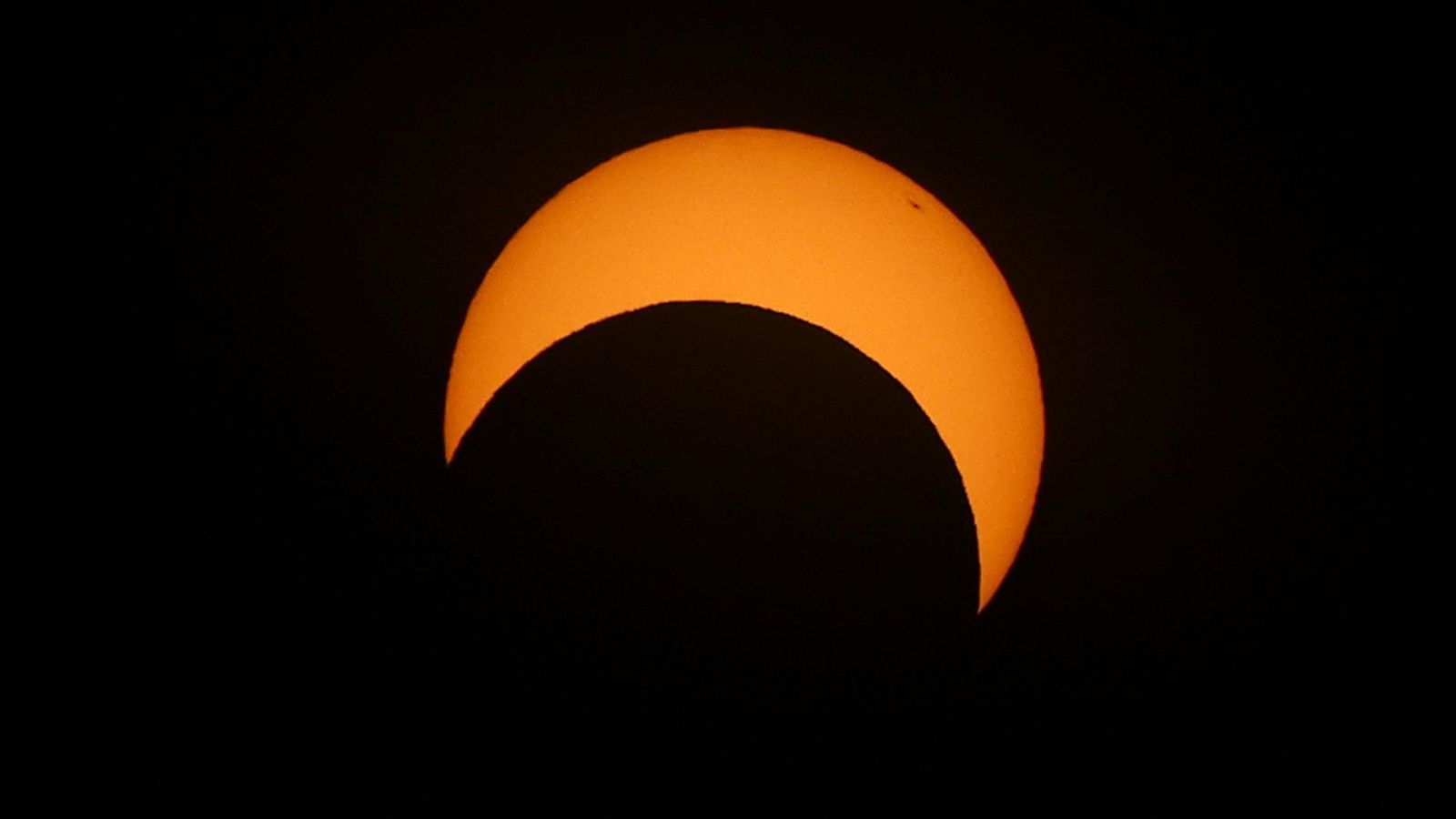
A solar eclipse occurs when the moon passes between the earth and the sun, blocking some or all of the sun's light from reaching part of the earth.
A lunar eclipse occurs when the earth passes between the sun and the moon. The earth blocks the sunlight that would normally be reflected by the moon, which can cause the moon to appear red or orange. A lunar eclipse takes place at night during a full moon.
Islam does not require Muslims to deny these physical causes. The movements of the sun, moon and earth explain how an eclipse occurs. The Islamic teaching addresses its greater meaning: these events happen by Allah's decree and should remind people of His power, the Hereafter and their need to return to Him.
Allah says: “We do not send the signs except as a warning.” (Qur'an 17:59)
What happened during an eclipse in the Prophet's lifetime?
A solar eclipse occurred on the day Ibrāhīm, the young son of the Prophet ﷺ, died. Some people connected the eclipse to his death. The Prophet ﷺ immediately corrected this belief and taught that the sun and moon do not eclipse because of anyone's birth or death. They are signs from the signs of Allah.
This is an important lesson. An eclipse should not be treated as a superstition, an omen or a tribute to an important person. Nor should it be viewed only as a spectacle. The Prophet's response joined correct belief with action: he went quickly to prayer, led the people, remembered Allah and addressed the congregation afterwards.
His reaction shows the seriousness with which a believer receives the signs of Allah. Knowledge of the science behind an eclipse does not remove its spiritual meaning. A forecast can tell us when an eclipse is expected, but it cannot make the event independent of the Creator who governs the sun, moon and everything between them.
How to pray Ṣalāt al-Kusūf
Ṣalāt al-Kusūf is unlike the five daily prayers in one important respect: it consists of two rakʿahs, with two periods of standing and two bowings in each rakʿah.
The prayer is described in the source as follows:
Muslims gather for the prayer, with both men and women attending.
There is no adhān. The people are called with the words “al-ṣalātu jāmiʿah”, meaning that the congregational prayer is gathering.
The imam begins the first rakʿah, recites Sūrah al-Fātiḥah and then a long passage of the Qur'an aloud.
He performs a long rukūʿ, rises and stands again.
While still in the same rakʿah, he recites al-Fātiḥah again followed by another passage, shorter than the first.
He performs a second rukūʿ, shorter than the first, then rises and completes two sujūd.
The second rakʿah follows the same pattern: two recitations, two bowings and two prostrations. Each part is shorter than the corresponding part before it.
The prayer ends with the taslīm.
The Prophet ﷺ lengthened the recitation, bowing and prostration. This gives the prayer its reflective character: it is not meant to be hurried. The imam may also deliver a sermon after the prayer, praising Allah, reminding the congregation and encouraging repentance.
When should the eclipse prayer begin and end?
The prayer begins when the eclipse is seen and continues until it has cleared. There is no fixed minimum duration. The Prophet ﷺ remained in prayer until the eclipse had passed.
Astronomical forecasts can help communities prepare, but the booklet emphasises that the prayer itself is connected to the eclipse taking place, not merely to a predicted time. Local mosques should therefore communicate clearly about whether and when a congregational prayer will be held.
What else should Muslims do during an eclipse?
Prayer is central, but it is not the only response mentioned in the Prophetic narrations. Muslims are also encouraged to:
- make sincere duʿā
- remember and glorify Allah through takbīr, tasbīḥ, taḥmīd and tahlīl
- seek Allah's forgiveness
- give in charity
- seek refuge with Allah from the punishment of the grave and the Fire
- reflect upon the Hereafter with humility and concern
- advise one another and turn to Allah in repentance.
These actions shift our attention from watching an unusual event to responding to it with worship. The eclipse becomes an opportunity to renew faith, examine the heart and remember that the order of creation is entirely under Allah's command.
Turn a moment of wonder into worship
The Islamic response to an eclipse brings together sound belief, spiritual awareness and practical worship. Muslims recognise the physical process, reject superstition and follow the example of the Prophet ﷺ by praying, remembering Allah, giving charity and seeking forgiveness.
Moments such as these also show why structured Islamic learning matters. Knowing what to do before an eclipse begins allows a Muslim to respond with confidence and understanding. To study Islamic Studies and Arabic in a guided classroom programme, view Madinah College's courses and apply online. For flexible learning from anywhere, register for the MCL Portal and access courses in Qur'an, Arabic, Fiqh, Hadith and other Islamic sciences.
Primary source: Abul Abbaas Naveed Ayaaz, Essential Questions and Answers Regarding the Eclipse, originally published 27 July 2018. The source draws upon narrations collected by al-Bukhārī, Muslim, al-Bayhaqī and al-Nasāʾī.